3 Fixes To Stop Playground Injuries
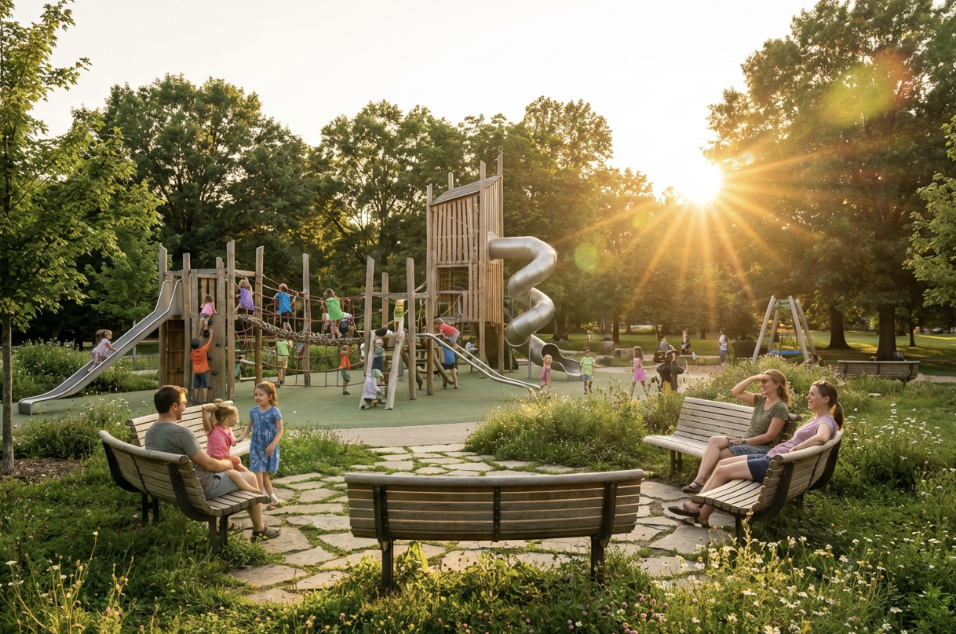
The three simple fixes to stop playground injuries are installing impact-absorbing surface materials, ensuring equipment is properly assembled by certified professionals, and committing to a structured maintenance routine.
These actionable strategies directly mitigate the structural hazards and hard falls that cause the majority of playground accidents.
Every year, more than 220,000 children under the age of 14 are treated in emergency rooms across the United States for injuries occurring on playgrounds.
That number is striking, and it becomes even more sobering when you consider that most of those trips were entirely preventable. Small, deliberate changes can compound into massive public health wins.
Think about how seriously safety is treated in other childhood activities. Cycling, for instance, has seen a dramatic reduction in head injuries largely because of consistent helmet use and safer road design.
Playgrounds require that same level of intentional, proactive thinking. Facility managers overseeing a school, daycare, park, or community space already understand this intuitively.
You care deeply about the kids in your community, and the good news is that meaningful playground safety improvements do not require an enormous budget.
By focusing on a few core areas, communities can dramatically reduce risks. This creates the kind of safe, joyful play environment every child deserves.
1. Choose Surface Materials That Cushion Every Fall
Why the Ground Beneath the Equipment Matters Most
Here is a statistic that should reshape how you think about playground safety: falls account for approximately 70 to 80 percent of all playground injuries.
Not equipment malfunctions, not entrapment, but falls. This means the most powerful safety upgrade you can make to almost any playground is not replacing the slide or upgrading the climbing wall. It is improving what children land on.
The U.S. Consumer Product Safety Commission is explicit about this in its Public Playground Safety Handbook. Surfacing materials must provide adequate impact attenuation, meaning they must absorb the energy of a fall from a child’s maximum accessible height.
Most commercial play structures require a surface rated to protect against falls from 6 to 12 feet, depending on equipment height. A minimum installed depth must be maintained consistently across the entire use zone.
The Problem With Common Surfaces
Despite clear guidance, a surprising number of playgrounds still feature concrete, packed dirt, asphalt, or grass as their primary surfacing.
These materials feel familiar and inexpensive upfront, but they share a critical flaw with zero meaningful impact absorption.
A child falling onto compacted soil from the top of a climbing structure is exposed to roughly the same injury risk as falling onto pavement. There is no cushion and no forgiveness.
Even wood chips and pea gravel carry significant limitations. They compact over time, scatter beyond the use zone, and require frequent replenishment to maintain safe depths.
When maintenance lapses, those materials stop performing their most critical function. Communities must seek better alternatives.
The Case for Impact-Absorbing Alternatives
When communities search for a surface that genuinely cushions falls while holding up to years of heavy foot traffic, engineered materials consistently outperform organic ones.
Facility managers evaluating eco-friendly playground materials need options that provide long-lasting shock absorption without constant replenishment.
For these specific safety and longevity requirements, utilizing WillyGoat’s rubber mulch for playground surfaces offers a compelling combination of performance and environmental responsibility.
Engineered recycled rubber is designed specifically for impact attenuation. It meets stringent ASTM F1292 standards for playground surfacing impact absorption, and critical fall height requirements.
Unlike organic materials, it does not decompose, compact with use, or wash away in heavy rain. The depth installed is largely the depth kept, season after season.
| Key Insight: Falls account for nearly 80% of playground injuries. Upgrading to impact-absorbing surfaces like rubber mulch is the most effective way to protect children and ensure compliance with federal safety standards. |
2. Ensure Equipment Is Professionally And Properly Installed
The Hidden Danger Nobody Talks About
Most playground safety conversations focus on equipment selection, age-appropriate designs, proper scale, and entrapment hazards.
While important, there is a less visible risk that affects even the best-designed equipment: improper installation.
The CPSC identifies a range of mechanical and structural hazards that emerge not from manufacturing defects, but from incorrect assembly. Exposed bolt ends that were never capped create serious laceration risks.
Use zones sometimes fail to meet the required 6-foot minimum clearance on all sides. Footings might be poured too shallow for the soil conditions.
Components that were not torqued to manufacturer specifications will gradually loosen under daily load. A structural failure will not announce itself until a dynamic load causes a component to give way.
For well-meaning organizations organizing volunteer installation weekends, these risks are easy to underestimate.
Maintenance crews tasked with assembling complex commercial structures face similar challenges. Professional expertise is absolutely vital for ensuring long-term stability.
What Professional Installation Actually Looks Like
Certified, licensed, and insured playground installers approach each project systematically to eliminate these hidden hazards.
They follow a rigorous protocol to guarantee safety. This meticulous process ensures every component functions exactly as intended.
- Use zone compliance guarantees every piece of equipment is positioned with proper clearance from structures and adjacent equipment.
- Age-zone separation physically divides toddler areas from school-age zones to reduce collision risks.
- Anchoring systems feature footings that are excavated, poured, and cured according to local building codes.
- Final inspection involves rigorously testing each component under load before the space is opened to children.
Partnering With Installation Experts
Treating installation as a professional discipline rather than a weekend project is paramount. Partnering with suppliers who offer professional installation networks ensures that structural integrity is prioritized from day one.
Engaging experts who understand complex space needs transforms a potential liability into a secure community asset. This approach guarantees compliance with accessibility standards and local building codes.
| Pro Tip: When scheduling installation, confirm your team understands ASTM F1487 standards. Professional assembly guarantees correct use zone clearances and secure anchoring, preventing structural failures that often go unnoticed during DIY builds. |
3. Commit To Regular Safety Maintenance Checks
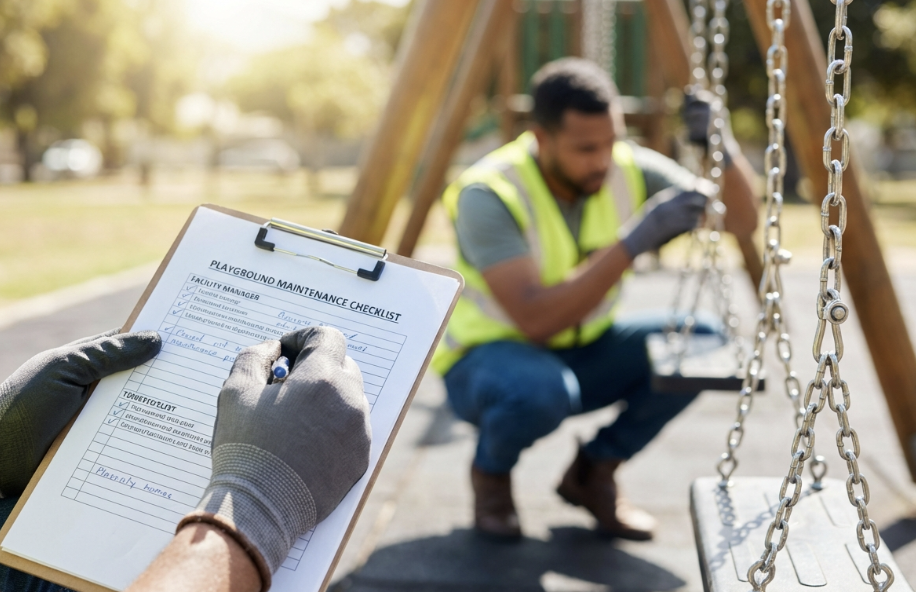
The Most Common and Most Costly Oversight
Communities often invest significantly in quality surfacing and professional installation, only to assume the job is finished. Wear and time do not take days off.
Playground maintenance is an ongoing commitment that directly determines whether an opening-day investment continues to protect children over the next decade. Hazards that emerge over time are often overlooked in casual observation.
- Rust and corrosion can silently compromise metal components in humid climates.
- Loose or missing hardware often works free under repeated dynamic loads.
- Cracked or splintering materials present immediate risks to plastic and wood elements.
- Fraying ropes and cables weaken climbing and suspension elements significantly.
- Compacted or displaced surfacing no longer meets the required safety depth minimums.
A loose bolt that could be tightened in thirty seconds during a routine walkthrough becomes a severe structural hazard if ignored.
Daily environmental exposure accelerates wear on even the most durable materials. Regular monitoring ensures these small issues never escalate into dangerous failures. Facility managers must prioritize proactive inspections.
A Realistic Maintenance Calendar
Building a consistent maintenance routine fits within the capacity of almost any organization by following a simple tiered approach.
Weekly visual walkthroughs conducted by on-site staff can identify obvious hazards, remove debris, and flag anything warranting closer attention.
Monthly hands-on safety audits go a step further with staff physically testing hardware tightness and inspecting moving parts. During these audits, staff should also probe surface depths at high-use zones.
Finally, scheduling an annual professional inspection provides a full structural and compliance review.
A Certified Playground Safety Inspector can evaluate sub-surface anchoring integrity and component wear thresholds. This comprehensive evaluation catches subtle degradation that daily users might miss. It is an essential investment in long-term safety.
Building Your Documentation System
One of the most practical playground safety tips any facility can adopt is keeping a structured maintenance log.
Recording the date, the inspector’s name, what was checked, and what action was taken creates necessary accountability.
Even when staff turn over, the log provides crucial continuity. Documented evidence of due diligence is invaluable for liability reviews and community improvement grants.
| Warning/Important: A “set it and forget it” mentality leads to preventable accidents. Daily wear, weather, and heavy use require a structured maintenance log to track repairs and ensure the playground remains safe. |
Now It’s Your Turn
Playground injuries are not an inevitable fact of childhood. The vast majority are the result of inadequate surfacing, improper installation, and deferred maintenance.
These are fixable problems with highly practical solutions. Communities have the power to change these outcomes immediately.
Take a moment to walk through your local playground with fresh eyes. Ask yourself honestly if the surfacing is deep enough across the entire use zone.
Check if the equipment was professionally installed and properly spaced. Find out when the last documented safety check occurred.
If any of those questions raise doubts, that is the starting point. Safer playgrounds mean more afternoons of laughter and more confident kids willing to explore.
These spaces build stronger communities where every child can play securely. The fixes are straightforward, and the impact will last for generations.
| Author Profile: WillyGoat is the leading online retailer of commercial playground equipment for schools, parks, churches, daycares, and communities across America. |
 Email
Email