How to Document Bike and Gear Damage After a Crash
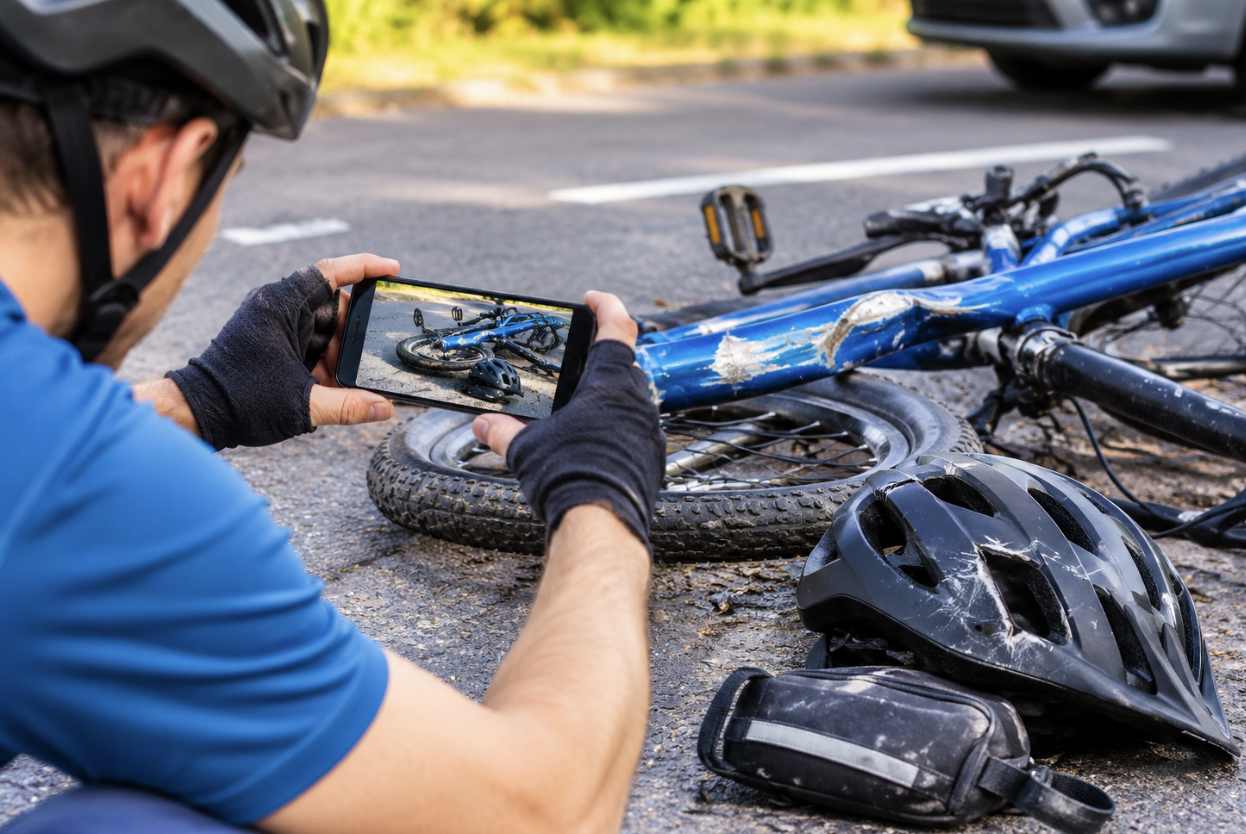
Photograph every damaged item before it’s moved, repaired or thrown away. Then list each part separately with its make, model and value, get a written shop inspection, and keep the broken pieces until the claim closes. Treat the bike as a frame, two wheels, a groupset, a cockpit and a pile of kit, not as one object, because each part needs its own record.
What Should You Photograph First?
Start with the whole bike, drive side and non-drive side, then work in close. Shoot every scrape, crack and bend with something for scale beside it, such as a coin or a tire lever. Photograph the frame’s serial number, often stamped beneath the bottom bracket, and the date sticker inside the helmet.
Don’t skip the parts that look fine. Carbon parts can hide damage, and a full set taken the same day shows the bike’s condition before transport, storage or a workstand can add marks of their own. Take pictures of the kit too, including torn bib shorts, a scuffed shoe, cracked glasses, a smashed light or bike computer.
How Do You Inventory a Bike Part by Part?
Write the bike down the way a shop would quote it, one line per component, so “my bike got wrecked” becomes figures someone has to answer.
| Part | What to record |
| Frame and fork | Brand, model, year, size, material, serial number |
| Wheels | Rim and hub model, carbon or alloy, tires, any wobble or flat spot |
| Groupset | Shifters, derailleurs, crankset, brakes, and a power meter if fitted |
| Cockpit | Bars, stem, saddle, seatpost, computer mount |
| Electronics | Bike computer, lights, radar |
| Helmet | Brand, model, size, manufacture date from the inside label |
| Kit | Jersey, bib shorts, jacket, gloves, shoes, glasses |
Pair each line with whatever proves its value, such as a receipt, an order confirmation email, a photo from the day you bought it, or a current retail listing for the same model. Upgrades matter most here, because a stock bike’s listed price says nothing about the wheels or power meter you added later.
An itemized list covers the property side of a claim. The injury side, and how far a rider’s own share of fault can cut the total, is valued differently from one state to the next. Bicycle Accident Lawyers Group’s guide to bicycle settlements by state sets out those differences.
Robert Goldwater, the group’s lead attorney, says the list does work a photo can’t.
“Give an adjuster ‘a bicycle’ and that’s what gets priced, one used item. Give them the frame, the wheels, the derailleur and the power meter, each with a model number and a receipt, and every line has to be answered on its own.”
Why Does a Carbon Frame Need More Than a Look?
Trek’s own Carbon Care guidance says “not all damage to carbon fiber will be visible” and lists “You get hit by a car or truck” among the events that call for an inspection. Its bottom line is blunt. A carbon frame, fork or part that “has been potentially damaged” should be replaced if “you have any doubt about its integrity.” That’s safety advice for the rider, not a ruling on what an insurer pays.
Trek draws the contrast itself. A damaged metal part bends or deforms, while a carbon part can conceal damage from the naked eye. A shop can’t see inside the layup either, so the value of its inspection is the written record. Ask it to state what it checked, what it found, and whether it recommends replacing the part or a manufacturer evaluation.
Treat carbon wheels and bars the same way, since a rim that took the impact can look perfectly round.
What Should You Do With a Crashed Helmet?
Replace it, and keep the old one. The US Consumer Product Safety Commission says bicycle helmets are built for a single impact, and “even if there are no visible signs of damage to the helmet, you must replace it after such an event”.
Never ride in it, but don’t throw it out either. A crushed liner or cracked shell records how hard your head hit the ground, and that matters when the injury side of a claim is valued. The Bicycle Helmet Safety Institute notes that most manufacturers will inspect a crashed helmet, and many replace it for a nominal fee. Photograph it inside and out, and keep it until the claim is resolved or the insurer has seen it before using either program.
“Buy the new helmet and bag the old one,” Goldwater says. “It was the only thing between your head and the road, and it still shows what happened.”
Why Shouldn’t You Repair Anything Yet?
Keep the damaged bike, wheels and kit exactly as they are until the claim is settled. An insurer may want to inspect them, and a repaired frame can’t show what the crash did to it. Store it all somewhere dry, and photograph it again first.
Save the paperwork as it comes in, including the shop’s written estimate, any towing or transport receipt, the cost of a rental bike, and receipts for replacement kit you had to buy to keep commuting.
If you rode with a bike computer or a phone app, export the ride file the same day and leave it unedited. It records your speed, route and the time the ride stopped, whichever way those details cut, and it was made at the time rather than reconstructed later.
 Email