From Power Curves to Predictive Models: How Data Is Rewriting Amateur Cycling Strategy in Canada
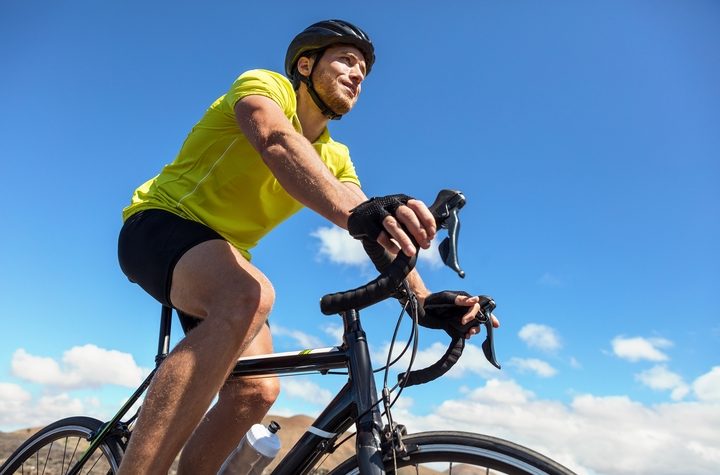
There is a general trend towards data-driven sports science, and it is on full display in cycling. More and more decisions, from the training process to race day, are made with the help of advanced computer models that can process large volumes of relevant data and identify previously unseen patterns.
The effectiveness of this approach is confirmed in practice, with top-tier competitors living by it. This is why we are seeing it trickle down to amateur cycling and affect how the sport is evolving in the digital era.
Collecting Data on Every Run
Perhaps the biggest enabler of the recent advances in cycling preparation and strategy is the abundance of highly specific, finely granulated data. It’s now possible to collect various types of data cheaply, ranging from exact times needed to navigate individual sections to the subtle changes in key biological markers throughout the race.
Thanks to wearable technology, even amateurs can gain highly detailed insights into their performance and compare their numbers to averages. Even more importantly, access to large amounts of data enables the development of sophisticated predictive models designed to serve the needs of the sport. By establishing clear standards for cyclists to aspire to, it’s possible to raise the overall performance level in the medium to long term.
Optimizing Energy Expenditure
One of the biggest issues amateur cyclists face is staying fresh on long routes over challenging terrain. This is an area where analytics can help tremendously by mapping the body’s activity and identifying motions that waste energy. The possibility to look into body mechanics in detail and find the optimal way to attack every curve or climb opens up new space for improvement and reduces overall race times. The emphasis is on fine adjustments rather than radical changes, which is why this is much easier to do with high-quality data. If done correctly, it can allow the rider to get more out of his body without having to gain additional strength or endurance.
Accounting for Environmental Factors
The real world can be unpredictable and treacherous, but it can also be measured. The conditions on the track can obviously affect how the race unfolds and put riders into situations they didn’t necessarily plan for. Smart cycling teams are increasingly working the environmental variables into their models and adjusting their race strategies to take advantage of any favorable breaks.
Elevation, temperature, humidity… all of these play a role, and the most competitive amateurs are learning how to work under any conditions. It’s not possible to change what the track will look like on race day, but being mentally and physically prepared for what you encounter certainly helps.
Seeking the Best Mathematical Chance to Win
Ultimately, a good overarching cycling strategy needs to outline a viable path to winning the race. That means looking at the field, recognising one’s own strengths and weaknesses relative to the competition, and choosing the approach that offers at least a puncher’s chance. This is not unlike maximising the odds of winning in legal sports betting in Canada, only the rider and his team are betting on themselves.
Since predictive models can simulate the race’s outcomes thousands of times, it’s possible to test different strategies and tinker with details until an edge emerges. That practically means the technology is levelling the playing field and creating an opening for less favoured riders to make a splash. However, finding and exploiting an edge requires great preparation and disciplined execution from the starting gun to the finish line.
 Email
Email