Reading a Tour de France Stage Like a Multi-Leg Bet
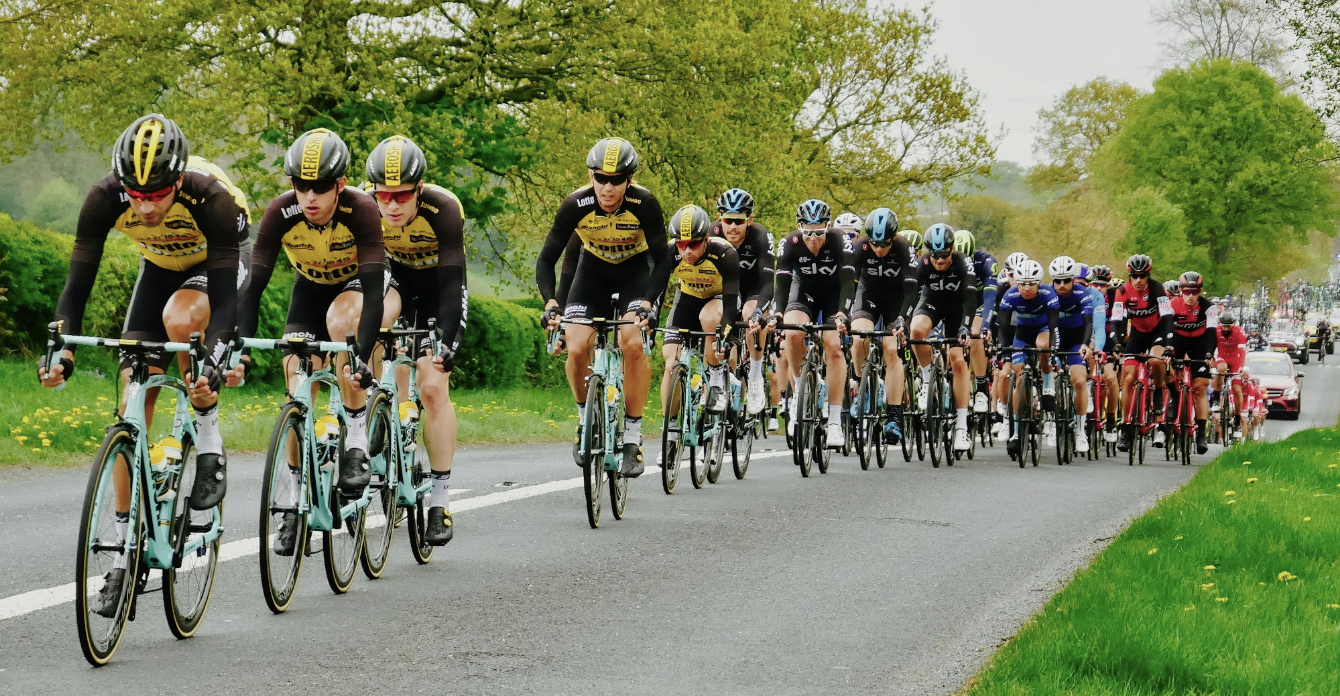
A Tour de France stage rarely resolves on a single moment. The breakaway forms, the gap stabilizes, a GC team decides whether to chase, the sprinters’ trains hold or fall apart on the final climb, and the day’s winner is shaped by four or five outcomes stacked on each other. Watch enough cycling and you see the race in those layers rather than as one finish-line photo.
That layered structure is also how anyone studying probabilities reads a multi-outcome event. Treat each tactical decision as its own question, assign a rough probability, and the most likely winner often emerges before the riders leave the neutral zone.
Why Cycling Sits So Well With Layered Analysis
Most team sports collapse into one variable: which side scores more. Cycling refuses. A flat stage in week one rewards a different rider than a mountain stage in week two, and within the same race the strongest climber may lose ten minutes in a crosswind because his squad got caught behind a split.
This is what makes pro cycling unusually rich for structured thinking. Almost any stage decomposes into stackable questions. Does the breakaway survive? Does the yellow jersey team commit to the chase? Does the wind favor an echelon? Each question has a defensible probability range based on the route, the weather, and the riders involved. Stack the answers and a coherent picture emerges.
How Analysts Structure the Same Question
When somebody studying odds wants to combine several outcomes into one assessment, the math gets unforgiving. A two-leg position at even money pays roughly three to one, but the combined probability of both legs landing is the product of each leg’s chance, not the sum. Misread one leg by five percentage points and the expected value flips.
This is the appeal and the trap of parlay betting, which packages several selections into a single position that only resolves if every leg is correct. The structure forces an analyst to think the way a tactical cycling reader thinks: in conditional probabilities, where each new question depends on the answer to the one before. A free calculator that runs the implied probabilities for any combination of legs is a useful research instrument, because it shows whether a four-leg cycling scenario priced at 12 to 1 actually represents a fair line once each segment has been assessed.
The point is not that anyone should be staking such positions. The analytical scaffolding is the same scaffolding a serious cycling fan already uses. You break the race into legs, you estimate each one, you combine them, and you compare your number to the public line.
Mapping Stage Types to Decision Trees
A mountain stage with two hors categorie climbs is not a single event; it is a sequence of filters. The first filter is whether the breakaway will be permitted to fight for the stage. If the GC battle is tight and the breakaway threatens the maillot jaune, the answer is usually no. The second filter is which climbers in the GC group still have teammates above 2,000 meters of altitude. The third is whether one of the protagonists at the top of the standings has the legs that day, which often depends on recovery from the previous mountain block.
A reader who treats those filters as independent legs and assigns each one a probability based on route data, recent form, and weather will arrive at a different favorite than someone who just glances at the overall odds board. The same logic plays out on a hilly classic, where the question stack involves which team controls the peloton, when the decisive move launches, and which sprinters survive the late climb.
The cobbled monuments add another variable: mechanical luck. Punctures and crashes on the pave reshape the front group almost every spring, and an honest probability tree has to leave room for that randomness rather than pretending the strongest rider on paper will always emerge first.
Modern Rivalries Make the Exercise Concrete
The current era of men’s grand tour racing has been defined by a handful of riders capable of winning anywhere on the calendar, which makes the decomposition exercise unusually clean. The Vingegaard and Pogacar duels of recent Tours are a study in how two athletes with different physiologies handle different stage architectures. Vingegaard’s strength on sustained, steady climbs differs from Pogacar’s punchy accelerations on shorter ramps, and a stage profile that mixes both rewards a careful reading of which terrain dominates the closing kilometers.
The same applies to season-long form. Pre-Tour assessments such as the question of whether Pogacar remained the man to beat heading into a recent edition leaned on his spring classics record, his altitude camp timing, and the depth of his UAE squad. Each of those signals is one leg in a longer assessment, and weighting them well separates a casual prediction from a defensible one.
Women’s racing offers parallel material. The Tour de France Femmes has produced longer, more selective routes that reward the same stage-by-stage decomposition, and the rivalry between SD Worx, Lidl-Trek, and Visma has delivered finishes where three or four scenarios were genuinely live until the final climb.
Where the Tool Helps and Where Judgment Still Wins
A probability calculator is mechanical. It takes the numbers you feed it and returns the combined implied chance and the fair price. What it cannot tell you is whether your estimate of a particular leg is grounded in real signal or in recency bias. The math is public, but the inputs come from the analyst, which means the quality of the output is bounded by the quality of the reading.
That is also why cycling rewards study. The terrain, the rosters, the weather, and the pattern of a given climb are all knowable. The race itself remains uncertain, but decomposing it is what makes spectating feel three-dimensional rather than flat.
Bring the same structured patience to a Tour stage that an analyst brings to a multi-leg scenario, and the final 20 kilometers stop being the whole story. They become the answer to a question the race began asking when the flag dropped.
 Email
Email