10 US Bridges That Will Test Your Cycling Nerve
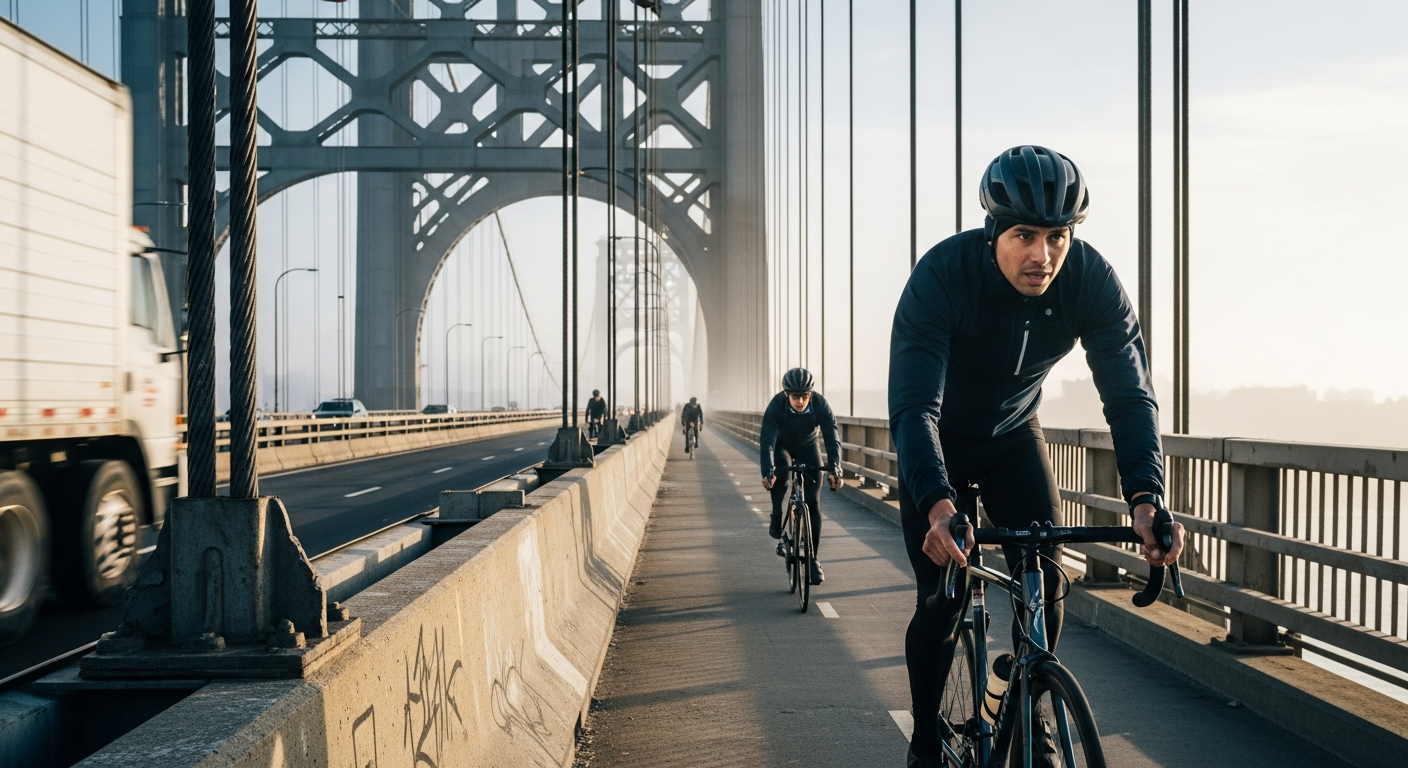
Some bridge crossings can turn a routine ride into a full-blown stress test, forcing you to navigate high winds, tight lanes, and drivers who don’t seem to notice you’re there.
| Name | Pros | Cons | Access/Pricing |
|---|---|---|---|
| Golden Gate Bridge |
|
|
Public access |
| Queensboro Bridge |
|
|
Public access |
| Rio Grande Gorge Bridge |
|
|
Public access |
| George Washington Bridge |
|
|
Public access |
| Rickenbacker Causeway |
|
|
Public access |
| Hurricane Gulch Bridge |
|
|
Public access |
| Conowingo Dam / US 1 Crossing |
|
|
Public access |
| Astoria–Megler Bridge |
|
|
Public access |
| Jekyll Island Causeway Bridges |
|
|
Public access |
| Wheeling Suspension Bridge |
|
|
Public access |
What Makes a Bridge Feel Dangerous on a Bike
Riding a bike to work beats sitting in traffic most days, but certain stretches of infrastructure can flip that equation fast. Bridges pack many of cycling’s worst stressors into one inescapable choke point: narrow operating space, speed gaps between you and motor traffic, exposure to strong crosswinds, and the kind of height that makes your stomach drop.
Recent bridge safety incidents across the country keep reinforcing what most riders already know, that cyclists judge a crossing not just by whether it’s legally accessible but by whether the infrastructure actually feels survivable. The Washington State Department of Transportation recently closed a bridge over Interstate 405 for repairs, a reminder that active-transit infrastructure requires constant maintenance to remain safe.
According to the NHTSA, 1,166 bicyclists were killed on US roads in 2023, and an estimated 49,489 suffered injuries. If a bridge consistently makes riders turn back, detour, or scratch a destination off their list entirely, that’s a transportation design failure putting vulnerable road users at serious risk.
To really understand why certain crossings feel so threatening, you have to look past basic traffic volume and pay attention to how physical design elements mess with human psychology. While some bridges are statistically dangerous, a feared bridge is usually one where you feel like there’s almost no margin for error if something goes sideways. Urban cycling safety guidelines tend to stress the importance of escape routes, and those are completely absent when you’re suspended hundreds of feet over open water.
Data from safety advocates shows that dedicated bike boulevards reduce stress, but retrofitting bridges to meet modern standards remains expensive and politically complicated. The intimidation factor multiplies when narrow lanes, steep grades, and high winds combine with unpredictable tourist behavior or heavy commercial freight. Sound familiar? Ask any daily commuter who’s rerouted their ride just to avoid a single bridge, and they’ll tell you it’s not about bravery. It’s about geometry.
A survey of 3,057 cyclists, commissioned by Bisnar Chase (a California personal injury law firm) and published as a resource on America’s most feared bridges for cyclists, puts hard numbers behind that gut feeling. The survey found that 42% of cyclists have experienced a near miss with a motor vehicle while riding on or near a bridge, and 44% reported changing their route or turning around entirely because a crossing felt too dangerous.
Even more telling, 53% said unsafe-feeling bridges had stopped them from cycling to a specific destination altogether. Bridges magnify every weak point in bike infrastructure because riders have fewer escape options, less operating space, and more exposure to speed, wind, and human error.
When you dig into driver behavior, close contact stands out as the biggest concern. Passing too closely and driving too close to the bike lane were the top concerns, each cited by 16% of surveyed participants. Speeding followed at 15%, while 14% of riders named distracted driving as the primary hazard that makes bridge crossings feel especially unsafe.
None of this is subjective hand-wringing; it’s a direct response to tangible hazards like shoulder-crowding, phone-distracted drivers, and infrastructure that gives you nowhere to go when things get tight. And here’s the part that should concern city planners: when high-visibility gear can’t even deter motorists from crowding the shoulder, the problem clearly isn’t rider preparedness.
Here are the factors that most commonly turn a bridge crossing into a white-knuckle experience:
- Narrow lanes or shoulders (think two feet between you and a logging truck)
- Strong crosswinds and weather exposure
- Steep climbs or long spans that drain your energy and focus
- No physical separation from fast-moving traffic
- High rider volume or conflict with pedestrians and scooters
- Difficult approaches, merges, or ramps that force tricky transitions
- Psychological exposure from height or wide-open views
- No practical alternate routes, so you can’t just bail
Golden Gate Bridge
The most recognizable suspension bridge on this list is also one of the easiest to underestimate, largely because everyone’s seen the postcard version. In practice, riders face relentless crosswinds, constant visual exposure to the bay far below, and a shared-path environment that shrinks fast once daily traffic builds up. Although it provides dedicated bike access, the Bay City Bike tour info notes that riders must constantly weave around unpredictable sightseeing foot traffic and varying rider speeds. The stress really spikes for less confident cyclists trying to hold a straight line on busy weekends, especially when dodging rental bikes and people who stop dead for a selfie. Taking a ferry for one leg of the journey is a practical workaround that can cut a lot of anxiety on recreational day trips. Bottom line: while the crossing remains a bucket-list achievement, the overtaking pressure and wind gusts make it a high-stress environment that demands real vigilance.
| Factor | Notes |
|---|---|
| Riding environment | dedicated bike/ped path on a world-famous span |
| Main stressor | wind, congestion, and unpredictable tourist behavior |
| Best for | experienced riders comfortable in crowds |
| Workaround | ferry for one leg or cross at quieter, early-morning times |
Queensboro Bridge
If you’ve commuted across this bridge during rush hour, you already know the drill: thousands of cyclists, pedestrians, and e-scooter riders crammed into a noisy, intense crossing that tests patience even for seasoned New Yorkers. The dense flow creates immense pressure, requiring sustained climbing effort in a narrow-feeling space that magnifies speed differences between traditional bikes and motorized devices.
Recent news coverage shows just how serious these conditions can get; a fatal bike path collision on the Queensboro Bridge left two people dead. Following the incident, safety advocates immediately called for tougher enforcement of the 15 mph speed limit for e-bikes, noting that some illegal scooters can reach speeds up to 53 mph.
A review of enforcement data found that twelve people have died on e-bikes and scooters citywide this year, which only deepens the anxiety among daily bridge commuters. Until the city completes its planned separation of pedestrians and cyclists, your best bet is to cross during off-peak hours or use alternative East River bridges to reduce the risk of conflict.
| Factor | Notes |
|---|---|
| Riding environment | dense urban commuter bridge with ongoing separation upgrades |
| Main stressor | congestion, noise, and severe speed differentials |
| Best for | regular urban commuters used to assertive riding |
| Caution point | peak-hour crowding and fast-moving micromobility traffic |
Rio Grande Gorge Bridge
Out over the high desert of New Mexico, this crossing presents a psychological challenge that rattles riders who are otherwise perfectly comfortable sharing the road with cars. Here, the immense vertical drop is the hazard, making the exposure itself the primary source of fear rather than any adjacent traffic. Standing roughly 600 feet above the river, it’s often described as the second-highest US highway bridge. Not a stat that calms the nerves.
The sweeping open sightlines and powerful crosswinds can make you feel genuinely unsteady, requiring a firm grip and a deliberate effort to hold your line. There are virtually no practical alternate routes for crossing the gorge in this area, which means touring cyclists sometimes have to just push through the vertigo. If you’re prone to extreme height anxiety, arranging vehicular transport across the span is probably the most rational call you’ll make all trip.
| Factor | Notes |
|---|---|
| Riding environment | high-elevation highway-style gorge crossing |
| Main stressor | extreme height and high-desert wind exposure |
| Best for | riders unfazed by severe vertical exposure |
| Workaround | check wind conditions or arrange vehicular transport |
George Washington Bridge
Connecting New Jersey and New York, this monumental steel structure frequently overwhelms first-timers with its sheer industrial scale and confusing ramp system. While it does offer dedicated active-transit pathways, the George Washington Bridge carries over 100 million vehicles annually, generating a deafening roar that can rattle the nerves of any cyclist pedaling alongside it. The Port Authority tells riders to proceed slowly and yield to pedestrians, which hints at the continuous friction involved in managing tight shared-space dynamics on a bridge of this size.
The primary intimidation factors come from heavy wind exposure, the approach geometry (which can feel maze-like if you haven’t scouted it beforehand), and the overall mass of the structure itself. Familiarize yourself with the entry and exit protocols before you go; getting lost near the on-ramps is an experience you don’t want. Approaching via the Hudson River Greenway offers a calmer lead-in, but the crossing itself remains mentally demanding for most riders making the trip over the Hudson.
| Factor | Notes |
|---|---|
| Riding environment | major regional bridge with bike/ped access and complex ramps |
| Main stressor | scale, ramps, and challenging shared-path dynamics |
| Less ideal for | riders overwhelmed by height, noise, or tricky transitions |
| Caution point | relentless wind, shared path etiquette, awkward approach geometry |
Rickenbacker Causeway
Scenic? Absolutely. But this Florida causeway also illustrates the tension between a route’s popularity and its documented history of severe vehicular conflicts. Connecting Miami to Key Biscayne, the roadway exposes you to intense sun, unpredictable coastal crosswinds, and impatient destination-bound traffic moving at speeds that feel way too fast when you’re on two wheels. The corridor’s reputation is backed up by serious crash data, and local safety checklists regularly flag the speed variance between leisure cyclists and aggressive motorists.
Because it doubles as a famous training ground for competitive road cyclists, you end up with a chaotic mix of speeds: Cat 3 racers hammering intervals right alongside families wobbling toward the beach. There are no meaningful alternate routes to Key Biscayne, so everybody shares the same strip of asphalt. If you’re planning the ride, use bright, visible gear, avoid peak beach traffic windows (Saturday mid-morning is especially gnarly), and ride with a large, visible group whenever you can.
| Factor | Notes |
|---|---|
| Riding environment | open causeway used heavily by commuters and training groups |
| Main stressor | high-speed traffic and extreme open exposure |
| Best for | strong, alert riders familiar with traffic-heavy roads |
| Workaround | ride early, use high-visibility gear, avoid busiest windows |
Hurricane Gulch Bridge
Tucked in the remote Alaskan wilderness, this striking highway crossing proves that gorgeous landscape beauty can contribute directly to a rider’s sense of dread. The bridge spans a vast gorge, leaving cyclists isolated and exposed to the elements and the punishing wake of high-speed commercial freight trucks. Because it exists in a road-first, low-shelter environment, the infrastructure offers almost no margin for error, turning a simple pedal stroke into something that feels distinctly high-consequence.
According to bridge safety reports from other rural states, maintaining protective barriers in remote locations is often difficult, meaning cyclists may rely on minimal structural shielding. This is an adventure-riding commitment crossing; there are no local detours to bypass the roughly 260-foot drop to the creek below. Touring cyclists should plan their crossing around favorable weather windows and high-visibility conditions. Trying to cross during a sudden squall with logging trucks bearing down behind you is, to put it mildly, not recommended.
| Factor | Notes |
|---|---|
| Riding environment | remote highway bridge over an exceptionally deep gorge |
| Main stressor | gorge exposure and fast-moving highway traffic |
| Less ideal for | casual riders or anyone deeply uncomfortable with isolation |
| Caution point | extreme isolation and very little room for error |
Conowingo Dam / US 1 Crossing
There’s nothing scenic about this one. This utilitarian Maryland crossing is widely dreaded for its tight operating space and a design that clearly prioritizes cars over everything else. State transportation guidance notes that lane sharing across the dam is permitted, thereby forcing unprotected cyclists to negotiate directly with drivers under constrained conditions. Because riders aren’t allowed during active lane closures, the state has actually adjusted Sunday work schedules specifically to preserve bicycle access (which tells you something about how many people rely on this route).
The crossing perfectly illustrates how a bridge can be legally accessible while remaining emotionally and physically intimidating; you have no physical buffer from vehicle traffic, period. National survey coverage has highlighted this route as one of the most frightening infrastructure bottlenecks on the East Coast. Check live traffic schedules before you go and be prepared to ride assertively, because timid positioning here tends to invite unsafe passing.
| Factor | Notes |
|---|---|
| Riding environment | functional roadway crossing over a dam with required lane sharing |
| Main stressor | tight operational space right beside active traffic |
| Best for | confident road cyclists comfortable taking space when needed |
| Workaround | check closure schedules and avoid reduced-roadway periods |
Astoria–Megler Bridge
Stretching across the mouth of the Columbia River, this highway span combines just about every factor that makes cyclists uneasy before a major tour. At roughly four miles long with about 196 feet of elevation gain at high tide, the crossing forces you to grind uphill while fully exposed to strong coastal winds. Oregon transportation authorities have acknowledged the structure as a major regional barrier, largely because its narrow two-foot shoulders place riders directly beside fast-moving logging trucks.
The crossing has been cited in national bridge rankings as a demanding endurance test with no practical alternative route for southbound Pacific Coast riders. The sheer duration of the exposure drains both physical energy and mental composure; a single crossing can feel like it takes forever when the wind is pushing sideways at 25 mph. Your best strategy is to monitor weather forecasts closely and attempt the crossing early in the morning to dodge heavier traffic and stronger afternoon coastal gusts.
| Factor | Notes |
|---|---|
| Riding environment | long highway bridge with narrow shoulders and sustained exposure |
| Main stressor | length, shoulder width, and no alternate route |
| Best for | confident endurance riders with strong bike-handling skills |
| Caution point | extended duration in a narrow shoulder with wind and traffic pressure |
Jekyll Island Causeway Bridges
Here’s the irony: the destination itself is famously relaxed and bike-friendly, but the approach across the coastal causeway often ranks as the most stressful segment of the entire trip. Carrying thousands of tourists over the Georgia marshes, the causeway lacks meaningful physical separation, leaving you vulnerable to erratic, destination-focused drivers who are already mentally checked out and thinking about the beach. The sweeping open-road exposure means you’ll likely battle stiff coastal crosswinds while also dealing with close passes from oversized RVs and impatient beachgoers.
Statistics discussed in shared-path safety guides show that transition zones between high-speed highways and low-speed resort islands tend to become collision hotspots. Because there’s no alternate terrestrial route to Jekyll Island, cyclists are forced to confront the reality that legal roadway access doesn’t guarantee comfort. To dial down the stress, maximize your visibility with flashing lights (front and rear), travel during low-traffic windows, and stay hyper-alert for sudden lane drifts by distracted motorists.
| Factor | Notes |
|---|---|
| Riding environment | coastal causeway leading to a highly bike-friendly destination |
| Main stressor | open-road exposure combined with heavy destination traffic |
| Less ideal for | family riders expecting low-stress infrastructure from the start |
| Workaround | travel during lower-traffic periods, aggressively maximize visibility |
Wheeling Suspension Bridge
Unlike every other entry on this list, this historic West Virginia structure generates its intimidation factor without a single motorized vehicle in sight. Now permanently closed to car traffic, the bridge relies on its vintage engineering, narrow deck, and constant structural movement to test a rider’s psychological comfort. The antique suspension design causes the path to sway and flex under strong river winds, creating an unsettling sensation of instability that can genuinely catch you off guard the first time.
According to recent reports on bridge incidents, structural anomalies and surface irregularities can contribute to single-vehicle micromobility crashes, so the risks aren’t purely psychological. The perceived fragility of the old steel cables and the low side railings amplify the feeling of vertical exposure, demanding a steady hand and a calm mind (easier said than done when the deck bounces beneath you). Riders who experience severe motion sensitivity or acrophobia may prefer a nearby modern crossing for a less nerve-racking trip over the Ohio River.
| Factor | Notes |
|---|---|
| Riding environment | historic suspension bridge open to pedestrians and cyclists only |
| Main stressor | vintage deck feel, motion, and psychological exposure |
| Best for | riders comfortable on older, narrower moving structures |
| Caution point | river wind, narrow structural feel, psychological exposure |
The Transportation Design Signal
So what ties all of these intimidating crossings together? A fundamental lack of forgiveness, where even a minor error can carry serious consequences. Bridges compress riders into narrow corridors, stripping away escape routes while exposing them to weather and major speed differentials.
As documented in recent urban transit policy discussions following fatal collisions, infrastructure that forces vulnerable road users into direct conflict with heavy machinery represents a serious failure of civic engineering.
When large numbers of commuters alter their daily routes to avoid a specific bridge, that’s a strong indicator that the design prioritized vehicular throughput over basic human safety. If a crossing consistently makes riders turn back, detour, or abandon their destinations, it isn’t just a confidence issue. It’s a transportation design signal that calls for real physical improvement, not another “share the road” sign.
 Email
Email