Best Underdog Wins in Tour de France History
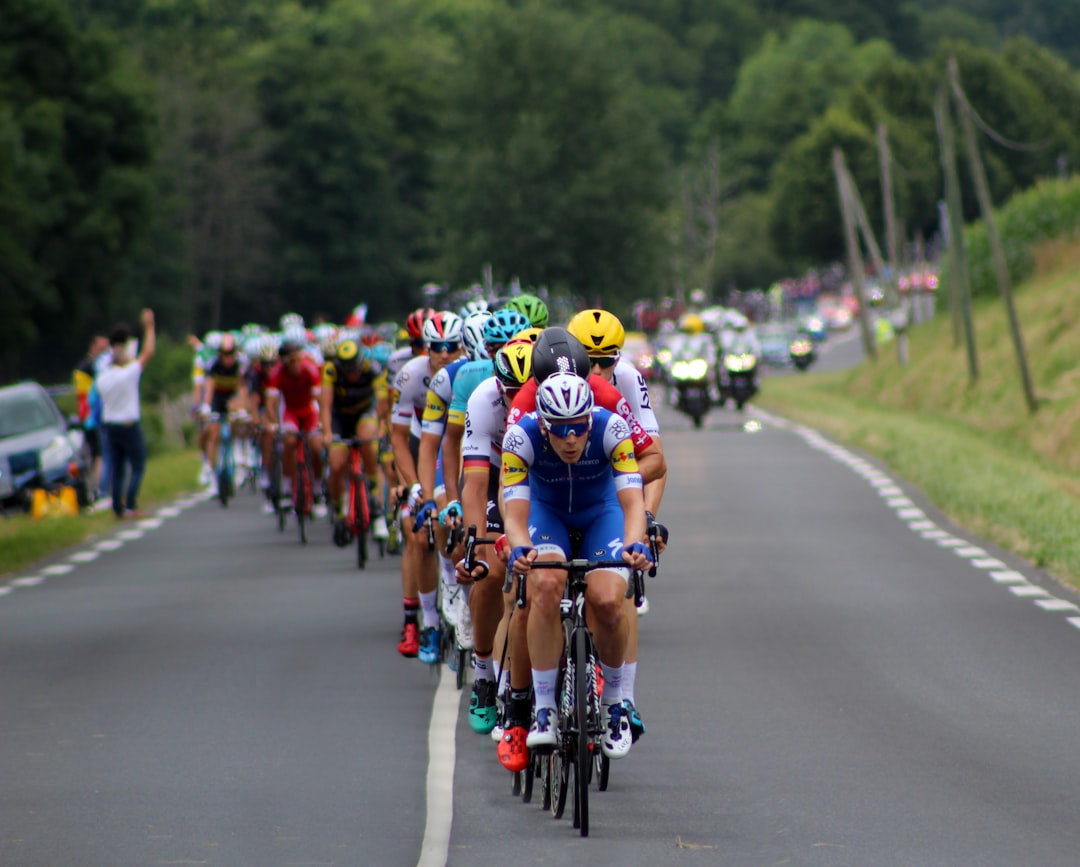
Tadej Pogačar is coming to the 2026 Tour de France to make history. Strade Bianche, Milano-Sanremo, the Tour of Flanders — already pocketed before June, a spring campaign so dominant that the best athlete on two wheels on the planet’s remaining credible opposition has quietly narrowed to one name. A three-peat of yellow jerseys, taking him to five triumphs overall, would place him alongside cycling’s absolute immortals. And online betting sites make him the clear favourite to get the job done.
The latest Bovada sports betting odds make the Slovenian superstar the short-priced 1/4 frontrunner to seal his date with destiny this July successfully. And yet, Jonas Vingegaard, the man who has broken Pogačar twice before — first on a granite col above Briançon, then again twelve months later — is coming too, arriving off the back of a Giro-Tour double campaign that signals not caution, but ambition. Is 2026 set to be a coronation? Or is it going to be another dramatic swing in a six-year rivalry that has already swung one way, then the next?
If Vingegaard is to stop his greatest rival from making history, he will have to do so as a 9/2 underdog, a price that has shortened from 6/1 just a few weeks ago. But as these men will prove, upsets do happen on the Champs-Élysées.
Carlos Sastre, 2008
There is a particular kind of professional humiliation that comes from your own directeur sportif not believing you can win the race you are riding. Bjarne Riis sat in the Team CSC bus in 2008 with the Schleck brothers — Frank and Andy, young, gifted, unquestionably the team’s future — and effectively overlooked 33-year-old Spaniard Carlos Sastre, who had spent years in this peloton doing the invisible work that keeps other men’s dreams alive. The veteran knew it. He said nothing. He rode the first fifteen stages quietly, defensively, letting Frank Schleck claim yellow at Stage 15 while he nursed something nobody else in the team knew existed.
Stage 17. Alpe d’Huez. Sastre attacked at the base without consulting anyone — not Riis in the car, not the brothers in his wheel. He just went. Flew up 13km of mountain and put 2 minutes and 15 seconds into the field by the summit. The extraordinary detail, confirmed by teammate Kurt-Asle Arvesen, is that Frank and Andy Schleck instinctively tried to chase him — their own teammate, in the yellow jersey, being hunted by the men he rode alongside — before the absurdity of the situation arrested them. Cadel Evans, the strongest all-rounder in the race, needed to limit losses in the Stage 20 time trial to overturn it. He couldn’t. Sastre survived by 58 seconds.
“After so many years,” he said afterward, “this is a dream come true.” Quiet, satisfied, pointed. The man Riis hadn’t believed in had just won the race that Riis himself directed.
Tadej Pogačar, 2020
In the start house of the Stage 20 time trial — the Vosges mountains, 36.2 kilometers, penultimate day — a 21-year-old from a Slovenian village of 896 people clipped in with 57 seconds of deficit and a race that every journalist on the mountain had already written up. Primož Roglič had spent three weeks controlling proceedings with Jumbo-Visma’s suffocating tempo. He was 7/4 favorite. Tadej Pogačar was 12/1, and even that was considered generous.
What followed was not a comeback. It was a demolition. Pogačar finished 1 minute and 56 seconds faster than Roglič across 36.2 kilometers — not a gap bridged, but a gap inverted, the maillot jaune changing shoulders in real time while the favourite received split after split in his earpiece and his legs turned to concrete on a road that had already been raced.
He crossed the finish line and fell apart on the tarmac. Ashen. Crumpled. Tom Dumoulin is pulling him upright, consoling him with an arm that could do nothing about the mathematics. Pogačar, barely coherent at the line: “I think I’m dreaming. My head will explode.” Roglič would later describe it as “brutal and devastating.” It was the youngest Tour victory since 1904 — and it was only the beginning.
Jonas Vingegaard, 2022
For two years, Pogačar had smiled at television cameras on mountainsides while rivals suffered visibly around him. The Merckx comparisons had stopped feeling excessive. He was 23 years old and appeared to be racing on a different planet from everyone else on the start list.
Stage 11. Col du Granon. Eleven-point-four kilometers at 9.2 percent, summit at 2,404 meters — but the real damage began on the Galibier, the brutal preceding climb that Pogačar paced himself, isolated, burning matches he didn’t know he’d need. By the time the Granon’s gradient bit, he had no teammates left and no reserves. Jumbo-Visma had constructed this deliberately — Primož Roglič doing the early work, softening the yellow jersey meter by meter, before Jonas Vingegaard struck with 4.5km remaining.
Pogačar had nothing. He lost 2 minutes and 51 seconds on a single climb — the first time, in two years of Tour dominance, that anyone had watched him crack. The awe in the commentary booths was unfeigned. Not just that Vingegaard had won the stage, but that Pogačar had looked, briefly, human. Vingegaard never relinquished yellow. He won again in 2023. Pogačar reclaimed dominance in 2024 and 2025 — but the Granon established something permanent: a blueprint, a weakness found, a rivalry with genuine teeth.
 Email
Email