7 Tips for Staying Safe on Two Wheels
Riding on two wheels is freedom with a throttle. Whether you commute daily or ride on weekends, a few smart habits can stack the odds in your favor and make every mile more confident.
These tips focus on the moments that matter most: what you wear, how you’re seen, the speed you carry, the space you leave, and the choices you make when traffic gets messy. None of this is complicated, but all of it pays off when conditions change fast.
Wear The Right Helmet and Gear
Start with a DOT or ECE-certified helmet that fits snugly without hot spots. A full-face design protects your jaw and face while cutting wind fatigue, which helps you stay alert. Good gloves, boots with ankle support, and abrasion-resistant jackets and pants round out your baseline.
Add impact protection where it counts. CE-rated armor in the shoulders, elbows, hips, knees, and back can spread energy from a fall and reduce injury severity. Many riders add a back protector or airbag vest for extra coverage.
Finish with comfort features that keep you riding smart. Vents prevent overheating on warm days. A pinlock or anti-fog visor keeps your vision clear in rain or cold. If your helmet accepts a drop-down sun visor, you can handle bright conditions without swapping shields mid-ride.
Be Visible and Predictable
You are smaller and easier to miss than a car, so stack the deck with visibility. High-contrast gear and reflective accents help at dawn, dusk, and night. Position yourself in your lane so drivers can see you in their mirrors, and avoid lingering in blind spots.
Ride like you expect to be seen – and then verify it. If a driver’s wheels are creeping or their head is angled away, assume they have not made eye contact. If a close call does happen and you need legal guidance afterward, a local PI lawyer can explain your options. Documenting photos and names right away helps preserve facts.
Signal early and clearly, and keep your line steady through intersections. Tapping your brake lever before slowing can flash your brake light and grab attention. A quick head check before lane changes confirms what mirrors can miss and keeps surprises to a minimum.
Mind Your Speed and Following Distance
Speed shapes everything from your stopping distance to the severity of any crash. Keeping it reasonable buys you time to read the road and react to surprises. On unfamiliar routes, lower your pace until you understand the rhythm of the traffic and the shape of the corners.
Leave a solid buffer ahead. A 2 to 3 second following distance in dry conditions gives you room to roll off the throttle and brake smoothly. In rain, gravel, or heavy traffic, stretch that to 4 seconds so you are not forced into a panic stop.
Data backs up the value of restraint. A national safety report noted that motorcycle outcomes improve when riders manage speed and create space because reaction time and braking distance are finite. NHTSA’s motorcycle guidance emphasizes that cooperation among all road users – and steady, predictable riding – cuts risk for everyone.
Scan For Hazards and Escape Routes
Keep your eyes up and moving. Check 12 to 15 seconds ahead for openings, then sweep back to your mirrors to understand closing speeds behind you. If you spot a turning car, a drifting driver, or debris in your path, adjust early so your move looks smooth, not sudden.
Break down hazards into categories, then plan your outs. Intersections, left-turning cars, driveways, and lane merges deserve extra caution. When you see a problem forming, roll off the throttle, apply your brakes, and shift your lane position to create a clear escape path.
Numbers highlight why this mindset matters. In an early 2024 estimate, federal analysts reported a 3.2% decline in traffic deaths compared with the prior year, yet motorcyclists still face heightened exposure when surprises pop up. Better scanning, calmer decisions, and consistent space management keep your margin intact when others make mistakes.
Train Your Skills and Judgment
Formal training sharpens your control and expands your mental toolbox. A refresher course helps you clean up countersteering, trail braking, and slow-speed balance, which pays dividends when traffic turns tight. Even experienced riders benefit from deliberate practice days in an empty lot.
Bring a learning mindset to every ride. Pick one skill to refine each week, like earlier mirror checks or smoother downshifts into corners. When a maneuver feels rough, repeat it until it becomes simple again, because polished basics are your best crash-avoidance tech.
Research points to the stakes. A recent federal analysis showed that per 100 million vehicle miles traveled in 2023, motorcyclists faced a fatality rate many times that of passenger car occupants. That gap underscores why consistent training and smarter choices matter on every trip, not just long ones.
Maintain Your Bike and Your Tires
A quick pre-ride check pays off. Look at tire pressures and tread depth, test both brakes, confirm your lights and horn, and scan for leaks or loose fasteners. A clean chain, lubed and properly tensioned, keeps power delivery smooth and predictable.
Tires deserve special attention because they are your only contact with the road. Underinflation lengthens stopping distances and makes turn-in vague, while overinflation reduces grip over bumps. Replace tires before they age out or square off, and balance them so the bike feels calm at highway speeds.
Keep maintenance simple but regular. Follow the service schedule for fluid changes and valve checks, and keep spare fuses and a compact tool kit on the bike. A stable, well-maintained machine lets you focus on reading traffic rather than fighting mechanical distractions.
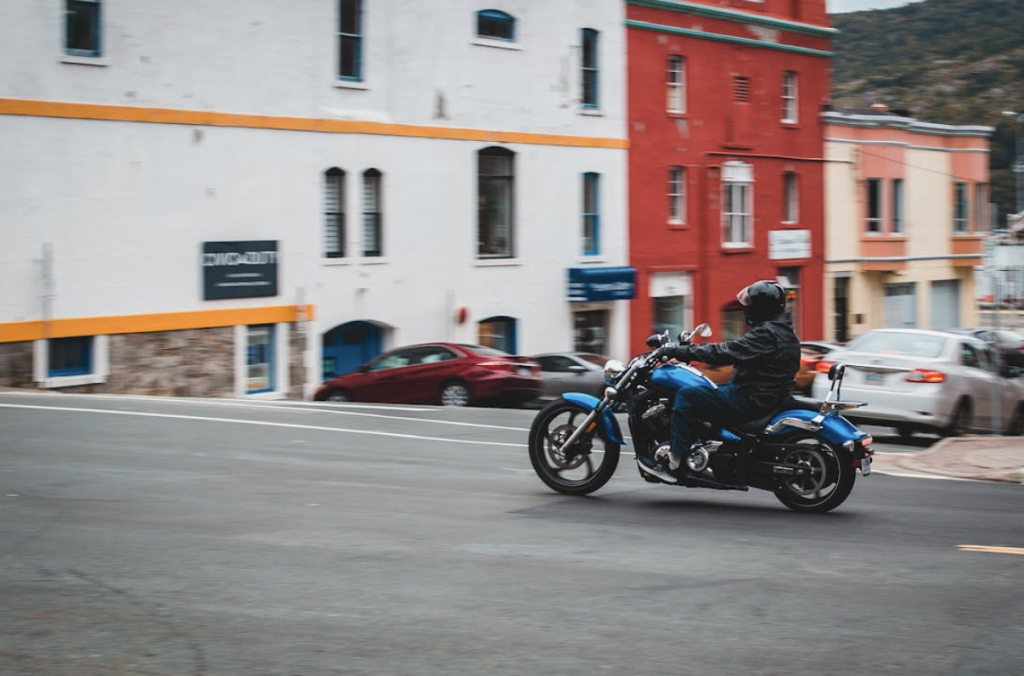
Ride The Conditions You Have, Not The Ones You Want
Match your inputs to the surface and the weather. On wet pavement, roll on the throttle smoothly, stay upright over painted lines and metal plates, and brake progressively. In heat, hydrate before and during the ride so fatigue does not creep into your decisions.
Use lane position to work with sightlines. If a truck blocks your view, move to the other track to peer around. If sunset glare blinds oncoming drivers, assume they may drift and give them more room as you pass.
Set boundaries that keep you safe. If wind gusts shove you across the lane or visibility turns patchy, shorten the ride or pick a calmer route. Being flexible is not quitting – it is professionalism in the saddle.
No matter how careful you are, risk never goes to zero. Gear, visibility, speed discipline, and steady scanning all stack together to make every ride safer. With a well-maintained bike and a trained, patient mindset, you can enjoy the freedom of two wheels while keeping your margin wide.
 Email
Email