How Jonas Vingegaard Twice Conquered Tadej Pogačar at the Tour de France
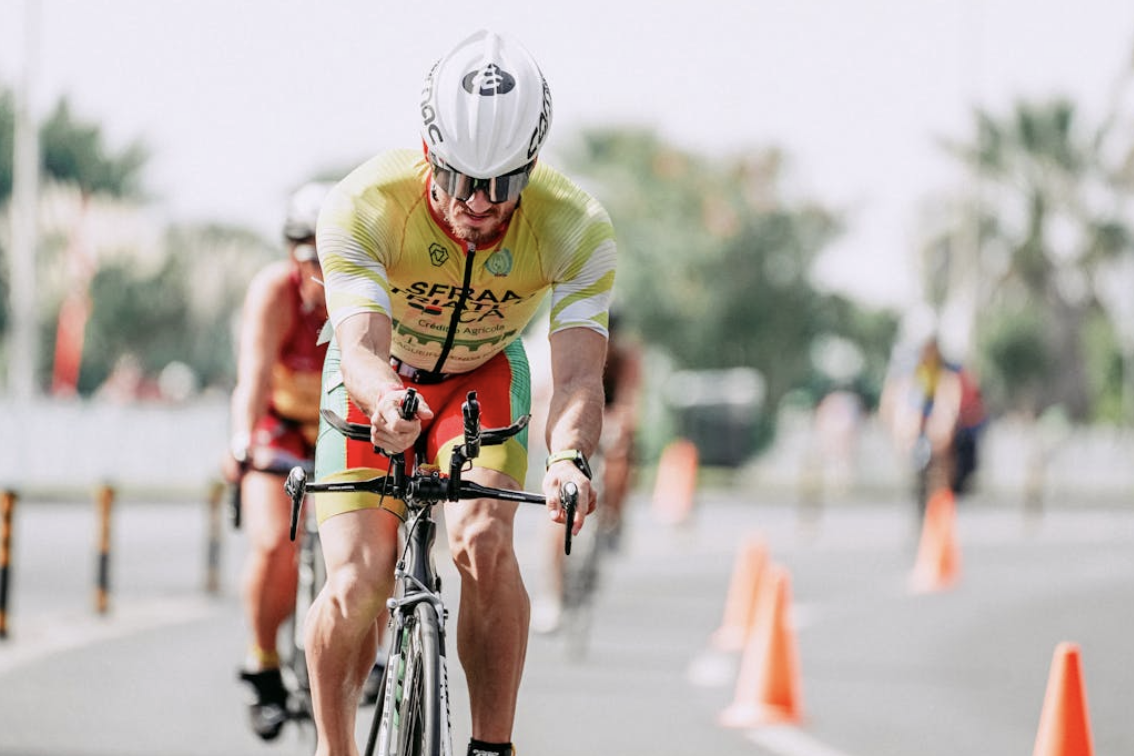
Picture the start house at Passy back in 2023’s Tour de France. Stage 16. A 22.4km mountainous time trial that everyone in the peloton knows will decide the final destination of the yellow jacket. Tadej Pogačar sits in the scorched wooden box in his aerodynamic skinsuit, helmet visor down, turning the pedals slowly. Somewhere behind him, Jonas Vingegaard is warming up on a turbo trainer, reading split times on a whiteboard, quiet and methodical—the kind of man who doesn’t look dangerous until he’s already gone… and then, it’s too late.
Ten seconds. After two weeks of brutal racing through the Alps, Pogačar leads the General Classification by just ten seconds. He’d defended every attack, answered every question his new Danish rival had posed, matching him move for move. He looked, in that moment, unbreakable.
He wasn’t.
Pogačar’s Back on Top
Fast forward three years, and once again, it is Pogačar that online betting sites make the man to beat, just as he was on that day at Passy in July 2023. The latest 2026 Le Tour odds from Lucky Rebel Sportsbook make the Slovenian a mighty 1/5 betting favorite to romp to his third straight title and his fifth overall, a number that would bring him level with the likes of Eddy Merckx, Bernard Hinault, Miguel Indurain, and Jacques Anquetil. And after winning the 2024 edition by 6’17” and 2025 by 4’24″—back-to-back demolitions so thorough they’ve reframed what professional cycling looks like at its ceiling—perhaps we shouldn’t be surprised.
But for two glorious summers sandwiched between Pogačar’s reign of terror, Denmark’s Jonas Vingegaard managed to somehow crack the code of the Slovenian maestro. But how did he do it? Let’s take a look.
The Granon Ambush
Pogačar entered Stage 11 of the 2022 Tour looking genuinely untouchable—two consecutive wins, yellow jersey already seized, UAE Team Emirates setting tempo on the lower slopes of a brutal Alpine day finishing at the Col du Granon, 2,413 metres above sea level. He’d won stages while celebrating, made Primož Roglič weep in 2020, and treated the Tour as a personal testing ground for just how far above everyone else he could operate. Nobody had seriously threatened him in the mountains. Nobody had the machinery.
Until Jumbo-Visma arrived on the scene.
The aforementioned Roglič pulled massive turns on the Galibier approach, stripping the peloton to a handful of GC contenders. Wout van Aert—a cobblestone and spring classics specialist, a man built for the Roubaix velodrome—was up there at altitude, buried in domestique duties, doing tempo work at 2,000 metres that would have cracked most climbers. Sepp Kuss, the quiet American, set a pace so ungodly it didn’t leave Pogačar a single moment to breathe, to recover, to find his legs. UAE was down to Mikkel Bjerg as his final cover when Vingegaard—with approximately 5km remaining, the gradient spiking—looked back at Pogačar, registered the slack jaw, the burning eyes, the fractional hesitation in the pedal stroke, and went.
Three minutes. In one stage. Gone.
That’s not just a time gap—it’s psychological annihilation. Pogačar, who’d never genuinely cracked in the mountains, suddenly looked human. Mortal. Scared even. Vingegaard seized yellow and never looked back.
Stage 18 to Hautacam was the kill shot—van Aert and Kuss setting a brutal pace on the final climb, Pogačar dropped again, the lead stretching toward three and a half minutes. Mid-stage, Pogačar overcooked a descent, slid into the gravel, and Vingegaard—the race leader, yellow jersey on the line—soft-pedaled and waited. He waited for the man trying to take everything from him.
It wasn’t just class; it was a statement. I don’t need your misfortune. I’m better. Final margin in Paris: 2’43”. First Danish Tour winner since Bjarne Riis, 1996. The key was depth: Jumbo-Visma had four riders who could have led most WorldTour teams. Team UAE had Pogačar and a prayer.
The Combloux Demolition
Back to that start house at Passy. Vingegaard went first, Pogačar two minutes behind. The first intermediate split arrived at 7.1km—Vingegaard had posted 9:54; Pogačar hit the checkpoint at 10:10. Sixteen seconds at 7km into a 22.4km race. Pogačar’s team panicked. With 5.6km remaining, they called a bike a swap—a lightweight climbing machine instead of a TT bike—gambling on the final gradient. Vingegaard stayed tucked on his time trial rig, suffering into the aerodynamic position through the steepening hairpins, sacrificing every comfort for seconds.
Was this the definitive changing of the guard? In the moment, it felt exactly like that.
Final margin: 1’38” to Vingegaard. Not between two team leaders—between the entire peloton. Nobody on the road that day finished closer to the Dane. His overall lead ballooned to 1’48”. The stage hadn’t just taken time from Pogačar; it had broken something deeper—the assumption, hardwired into the sport since 2020, that the Slovenian was always the measure by which everyone else was judged.
Stage 17 to Courchevel buried the corpse. Everyone expected Pogačar’s counter. The man had never quit. On the Col de la Loze, he cracked—visibly, publicly, irreversibly—relying on teammate Marc Soler to pace him up the mountain’s brutish final kilometers, managing the damage rather than racing. Vingegaard extended past seven minutes by the summit. Final margin in Paris: 7’29″—the largest winning gap since 2014, from a race that had been separated by ten seconds fourteen stages earlier.
The Reversal
Then came April 4, 2024. Itzulia Basque Country, Stage 4, the descent of Olaeta. High-speed crash. Vingegaard went down hard—broken collarbone, fractured scapula, several broken ribs, collapsed lung. Helicopter footage showed him motionless. Stretcher. Neck brace. He told Danish television afterward that he thought he was going to die.
Three months later, he started his three-peat attempt at Le Tour. That isn’t a comeback story—it’s a man gambling with his body against a rival who’d spent the winter eliminating every weakness Vingegaard had exposed. Pogačar’s time trialling improved. His third-week strength deepened. He’d already won the 2024 Giro that May and arrived in France not drained but sharpened, having spent 39 days in pink and yellow across both Grand Tours. Vingegaard finished second at 6’17”. Respectable given the crash. Irrelevant given the margin.
In 2025, Vingegaard attacked everything—Mont Ventoux, Superbagnères, every summit finish where he’d previously buried the Slovenian. Pogačar swatted him away. Won at Hautacam. Won at Peyragudes. Beat Vingegaard in the Stage 5 ITT—that 2023 psychological scar reopened, roles reversed. Final margin: 4’24”. Fourth Tour title; only the sixth rider in history to reach that number.
Current tally: Pogačar 4, Vingegaard 2. The Dane remains the only man with a proven blueprint to beat him. But blueprints gather dust when the building gets renovated.
 Email
Email